
By The Independent Political Correspondent
A pair of photographs, circulating with viral intensity on social media after a Seer 1 posted on his page with the intention of casting doubts on the leadership of CF’s leader Harry Kalaba, has sharply refocused the nation’s political discourse, framing the upcoming election not just as a contest of policies, but as a stark referendum on personal responsibility and familial stewardship.
The images feature the adult sons of the country’s two most prominent political figures, presenting a jarring visual contrast that has captivated and divided public opinion.
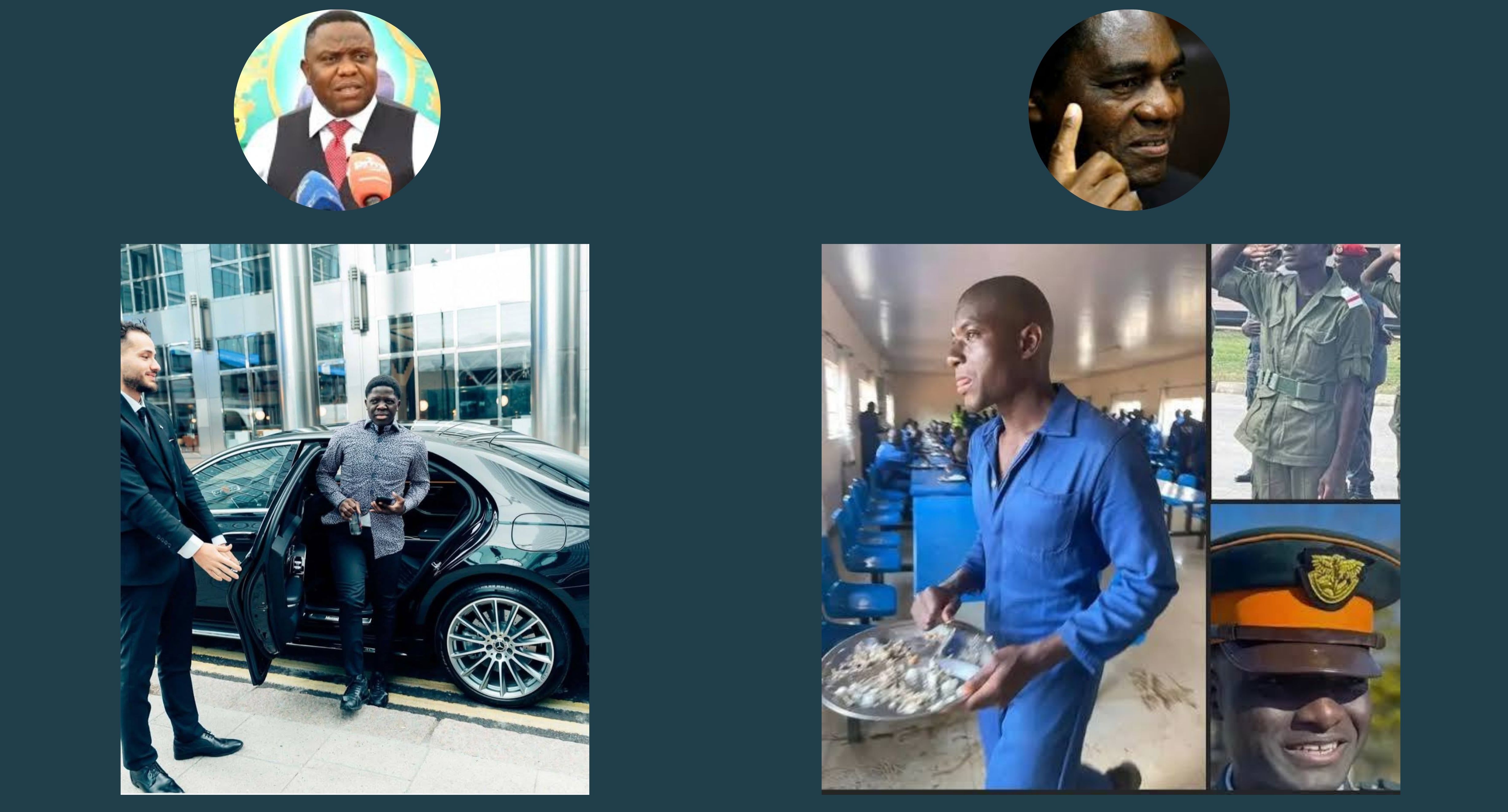
On one side is the image of an opposition leader Harry Kalaba’s son Chetekela – passionately called Chete by his friends. A recent picture of him arriving for a high-profile event shows the lad polished, confident, impeccably dressed and clearly at ease in a setting of affluence. This image aligns with his public profile as the founder and managing director of Public Relations and Communications firm with an A-Listed client base. Colleagues and business associates describe him as a self-driven entrepreneur whose lifestyle is funded entirely by his own enterprise.
“He pays his own bills, full stop,” a close associate, who requested anonymity, confirmed. “Chete has been financially independent from his father since he launched the firm a few years ago. What you see is the result of his own hard work.”
The counterpoint is a somewhat official portrait of the sitting president’s son in military attire. The image, shows a profoundly different figure. The presidents son appears gaunt and emaciated in his uniform, with a noticeable pallor to his skin and a slumping posture that suggests exhaustion or ill-health. While the State The visual evidence of the lads low self esteem and eroded confidence has sparked widespread concern and intense speculation on the possibility of substance abuse challenges.
“Leadership begins at home,” argued a renowned behavioural scientist from a named university. “We are not judging the young men for their struggles or their success in isolation. We are observing the outcomes of two different paternal philosophies. An adult child who is well-adjusted, disciplined, and self-sufficient often reflects a household where those values were prioritized and instilled. Conversely, another adult—despite all the privilege and security of the State —who appears lost and in crisis, suggests a catastrophic failure of parental guidance and attention.”
This sentiment taps into a deep-seated cultural belief that the character of a leader is mirrored in the conduct of their offspring. The narrative framing Chete is one of competent self-management: a man who oversees clients, budgets, and a team—microcosms of national governance. The narrative surrounding the sitting presidents son on the other hand fairly or not, is one of dependency and distress.
“The ability to manage one’s own affairs is the most basic test of competence,” wrote columnist Milwaela Branden in his latest publication on Human Behaviour. “If a father cannot guide his own son to safe harbor, what hope does he have of steering a nation through turbulent waters? While Kalaba may not have the power of incumbency, but he appears to have the power of a well-run household. And in the end, which is more indicative of true leadership strength?”
The Kalaba campaign has cautiously welcomed the discourse. “Chete’s life is his own achievement,” a spokesperson said. “But if the public sees in his independence and discipline a reflection of his father’s principles—principles of accountability, hard work, and integrity—then that is a connection they are free to make.”
As the pictures continue to circulate, they are anticipated to be potent, unspoken symbols in the campaign. For many voters, the polished entrepreneur and the beleaguered soldier are no longer just private individuals; they have been transformed into proxies in a national debate over what it truly means to be fit to lead. The question now echoing across the nation is a simple one: which household exhibits the order, discipline, and success that you would wish for the country itself?