
By Thandiwe Ketiš Ngoma
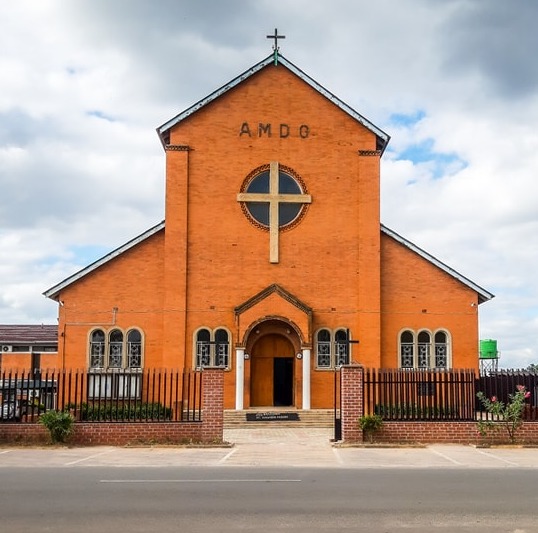
The Catholic Church’s involvement in Zambia dates back to the late 19th century, long before the rise of modern political parties or formal state structures. Early Catholic missionaries—such as the White Fathers and the Jesuits—did far more than preach. They built the country’s earliest mission schools, health centres, agricultural training institutions, and technical workshops.
These institutions produced some of the first generations of educated Zambians who later joined nationalist movements, public service, trade unions, and civil society. Their educational work instilled values that shaped Zambia’s political culture, including respect for human dignity, personal responsibility, civic consciousness, organisational discipline, and community leadership. Even before independence, the moral and social teachings of the Church helped cultivate a population capable of embracing democratic participation. The Church did not merely evangelize; it prepared citizens for leadership, dialogue, and political engagement.
The Church as a Voice of Conscience During the One-Party Era
During the Second Republic (1972–1991), when Zambia became a one-party state under UNIP, many independent organisations were restricted or co-opted. Yet the Catholic Church remained one of the few autonomous institutions with the courage to speak openly on governance issues. Through pastoral letters, Catholic newspapers, social teaching programmes, and public statements, the Church reminded those in power about universal human rights, the dangers of political monopolies, and the importance of transparency and accountability.
The 1990 Pastoral Letter “You Shall Be My Witnesses” became a turning point. At a time of deep economic distress and widespread political frustration, the Church gave voice to the concerns of ordinary citizens and called for the restoration of democratic space. Historians widely recognise this intervention as one of the catalysts for Zambia’s return to multiparty democracy in 1991.
The Church and the 1991 Transition to Multiparty Democracy
As Zambia approached the crucial 1991 elections, the Catholic Church played a stabilising and peace-building role that helped the country avoid chaos or violence. Through the Zambia Episcopal Conference (now ZCCB), the Catholic Commission for Justice and Peace (CCJP), and partnerships with Protestant and Evangelical churches, the Church mediated national dialogue, conducted nationwide voter education, monitored elections, discouraged political violence, and promoted unity during a highly polarised period.
These actions were not partisan—they were expressions of civic responsibility. Zambia’s peaceful transition owes much to the Church’s moral authority and steady presence.
Defender of Democratic Space in the Third and Fourth Republics
From 1991 to the present, the Catholic Church has remained one of Zambia’s most consistent defenders of democratic values. It has challenged wrongdoing under every administration—UNIP (post-1991), MMD, PF, and now UPND—demonstrating its loyalty to principles, not political parties.
The Church continues to champion accountable governance, social justice, economic fairness, ethical leadership, and the protection of the poor and marginalised. It also remains one of the nation’s largest providers of education, healthcare, and community development services, especially in rural and hard-to-reach areas. In many communities, Catholic institutions form the backbone of social and economic life.
Why Attacking the Catholic Church Is Misguided
The Catholic Church’s engagement in governance issues is not new or unexpected. It is rooted in more than 130 years of service and moral leadership. Speaking against injustice, corruption, or abuse of power is part of its mission. Accusing the Church of overstepping simply because it raises uncomfortable truths ignores its historic role and constitutional freedom to contribute to national discourse.
Furthermore, attempts to portray the Church as partisan are inaccurate. The Church has always critiqued governments when they deviate from ethical or democratic norms. This consistency should be seen as integrity, not political rivalry.
The Church also provides essential services that the state still depends on: schools, hospitals, clinics, shelters, and community projects. To undermine such an institution is to weaken the very social fabric that supports millions of citizens.
Perhaps most importantly, hostility toward the Church threatens national unity. The Catholic Church remains one of Zambia’s most trusted and respected institutions. Efforts to discredit or intimidate it risk creating unnecessary tension, eroding public confidence in leadership, and shrinking democratic space.
Conclusion: A Partner, Not an Enemy
The Catholic Church has been central to Zambia’s development—from mission education in the 19th century, through the struggle for democracy in 1991, to its continued defence of justice and human dignity today. It has guided the country through crises, transitions, and ethical challenges.
Any attempt by the UPND government to “fight” the Catholic Church is not only unnecessary but ultimately self-defeating. The Church is not an adversary; it is a partner in nation-building. Attacking it for fulfilling its historic mission is a waste of time and a disservice to Zambia’s democratic maturity.
Nations grow stronger when they value their moral institutions—not when they attempt to silence them.