
The Independent Correspondent
Saturday 24th January, 2026
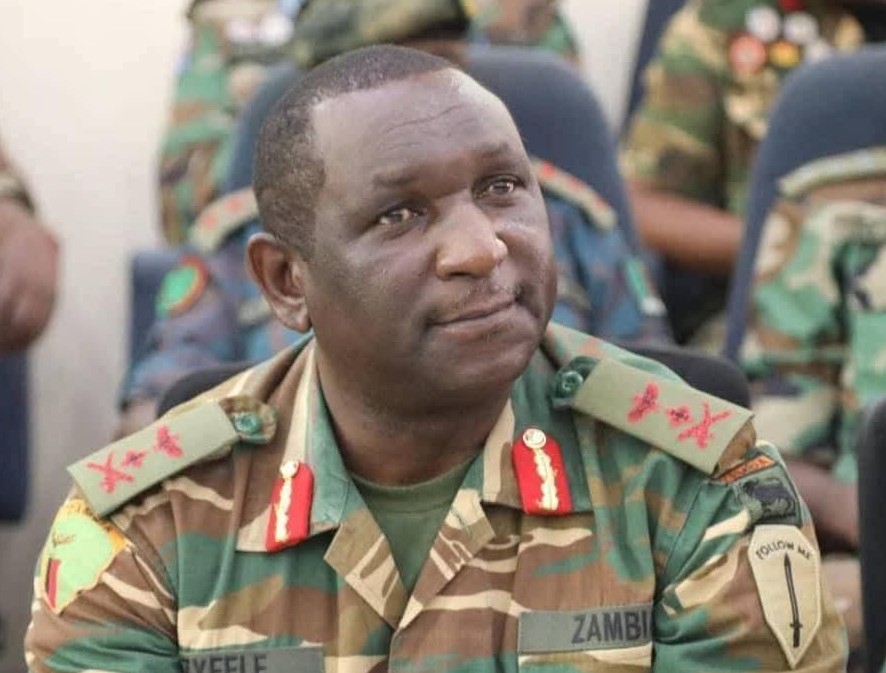
The appointment of senior military commanders is never a routine administrative act. It is a weighty decision that speaks to the values, judgment, and priorities of the Commander in Chief, and it carries profound implications for national peace, security, and public trust. It is for this reason that the elevation of Lieutenant General Geoffrey Zyeele has raised serious questions that cannot be ignored.
At the time of his promotion, Lt. Gen. Zyeele was reportedly linked to a corruption matter involving a Kenyan national, Stanely Livondo. Mr. Livondo is a controversial figure in regional circles, widely associated with questionable transactions, including allegations of defrauding the Kenyan government. While the courts, not the press, determine guilt or innocence, the optics of elevating an officer under such a cloud were troubling from the outset. The logic behind President Hakainde Hichilema’s appointment of Lt. Gen. Zyeele still remains troubling. At the time of his elevation, Zyeele was—and reportedly remains—under active investigation by the Anti-Corruption Commission (ACC). The investigation centers on a $21 million tender for the construction and upgrade of military hospitals.
Leadership at that level demands not only competence, but unimpeachable integrity—both real and perceived.
Public concern has only deepened following reports that the same Mr. Livondo allegedly sponsored the wedding of Lt. Gen. Zyeele’s son in December. More disturbing, however, were claims that the Zambia Army’s Special Forces were deployed as security at this private civilian function. Special Forces are elite, highly trained units designed for exceptional national security threats. Their use as ceremonial or private security guards represents, at best, a grave lapse in judgment and, at worst, an abuse of office that undermines professionalism within the ranks.
Further questions arise from recent personnel movements within the Army. Reliable information reaching The Independent suggests that Lt. Gen. Zyeele removed a seasoned and professional officer, Gen. Swana, from Special Forces and reassigned him to Anti-Poaching duties. In his place, Gen. Moses Shapwaya—reported to be a relative of the Army Commander—was installed. Gen. Shapwaya was one of two officers elevated to the rank of General at the end of 2025, a promotion that itself set records, as both officers are said to have served less than 15 years each in the Army.
While the reasons behind Gen. Shapwaya’s rapid elevation are the subject of widespread discussion, the promotion of the other officer, Gen. Mwizukanji, is a matter for another day. What is clear is that such fast-tracked advancements, when coupled with apparent familial ties, risk creating the perception of favoritism and eroding morale among career officers who have dedicated decades to service.
Against this backdrop, the Army Commander’s public threats to “eradicate” illegal miners take on a more troubling dimension. Illegal mining is a real problem that demands a lawful, coordinated, and civilian-led response, supported—not dominated—by the military. Yet there are growing fears that this rhetoric is a smokescreen for an underground operation: clearing artisanal miners from resource-rich areas only to pave the way for elite units, including Special Forces, to move in and control illegal mining activities themselves. If true, this would represent a profound betrayal of the Zambia Army’s constitutional mandate and long-standing tradition of discipline, neutrality, and service to the people.
Lt. Gen. Geoffrey Zyeele is offside. His alleged corruption, nepotism, misuse of resources, and incendiary language render him unfit for command. His continued tenure is a clear and present danger to military professionalism, civilian safety, and national peace.
The “template” being deployed is not one of lawful enforcement, but of state capture by militarized means. The call to “exterminate” is a smokescreen. The real goal appears to be clearing the ground—not just of illegal miners, but of any obstacle to control.
President Hichilema must act. Remove this Commander. Uphold the law. Restore the dignity of the uniform and the trust of the nation. The alternative—a criminal operation masquerading as a military one—is a path that leads only to ruin. Zambia is, and must remain, above this.