
Zambia Under State Capture: A Case of Kanona
The Independent Correspondent
Wednesday 14th January, 2026
The award of key components linked to the 220KV Tanzania–Zambia Power Interconnector has once again placed the spotlight on the troubling relationship between political power and private business interests under the UPND administration. At the centre of this controversy is Kanona Power Company Limited, a firm whose ownership structure has raised serious questions about transparency, conflict of interest, and the possibility that Zambia is sliding deeper into state capture.
Kanona’s shareholders are widely reported to include known allies and relatives of President Hakainde Hichilema. While no law explicitly forbids politically connected individuals from engaging in business, the problem arises when such companies appear to benefit from strategic national projects under an administration led by someone to whom they are closely linked. This reality raises fundamental questions about the conduct of the President and the ethical boundaries of his leadership.
More importantly, the Kanona issue may help explain President Hichilema’s consistent failure to decisively confront graft within his own government. Over the past few years, numerous politicians and commentators have expressed concern over what they describe as his non-committal posture when corruption allegations involve individuals close to him or his family. The contrast between the administration’s aggressive posture toward perceived political opponents and its caution—or silence—when allies are implicated has not gone unnoticed by the public.
A few years ago, the Drug Enforcement Commission (DEC) informed the nation that investigations involving serving ministers were underway. To date, no action has been taken against those ministers. No arrests, no dismissals, no public conclusions. This prolonged inaction has inevitably fuelled speculation. Even those close to the President have been quoted arguing that he cannot discipline implicated ministers because doing so would open the door to scrutiny of even bigger deals in which he himself is allegedly involved. While such claims may be dismissed as speculative, leadership is judged not only by denials but by action—and in this case, action has been conspicuously absent.
When viewed alongside other controversial decisions, the picture becomes even more disturbing. The manner in which Konkola Copper Mines (KCM) was handed back to Vedanta, despite widespread public concern, and the opaque movements surrounding ZCCM-IH shareholding have deepened doubts about the President’s commitment to transparency. These developments collectively undermine the carefully cultivated image of a reformist leader waging a moral crusade against corruption. They instead suggest a pattern of governance that protects powerful interests while ordinary citizens are asked to trust assurances without evidence.
It is therefore not surprising that calls for greater transparency have intensified. Citizens First (CF) President, Harry Kalaba has repeatedly challenged President Hichilema to declare his net worth if he truly has nothing to hide. This demand resonated with many Zambians and was later echoed in sentiment by the United States Ambassador to Zambia, who emphasised the importance of transparency and accountability among those in positions of power. Such calls reflect a growing belief that declarations, not slogans, are what restore public confidence.
Kanona has thus become more than a company associated with a power interconnector project. It has emerged as a symbol of a deeper national concern—that state power is being leveraged to benefit a narrow circle connected to the Presidency. When major infrastructure projects, mining assets, and state investments appear to orbit around politically connected interests, the line between public service and private enrichment becomes dangerously blurred.
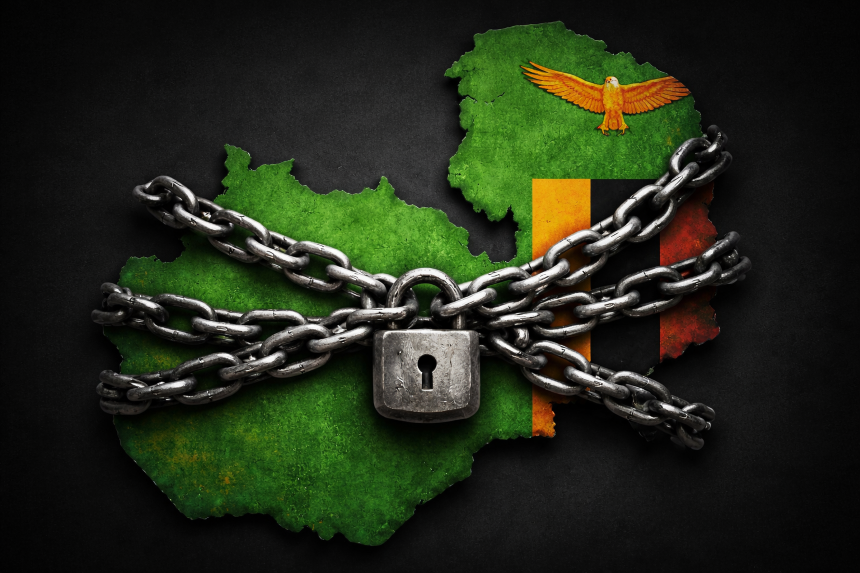
It is easier for one to conclude that we have sufficient reason to believe that Zambia is under state capture. The accumulation of unresolved investigations, selective anti-corruption enforcement, and controversial economic decisions points to a governance crisis that cannot be ignored. The biggest task for the incoming government will be to unwind some of the illicit and questionable deals concluded under the UPND—deals that, by comparison, may make those of the PF era look like child’s play. Zambia’s future depends on confronting this reality honestly, before the damage becomes irreversible.