
By the Independent Political Correspondent
Thursday, 5th February, 2026
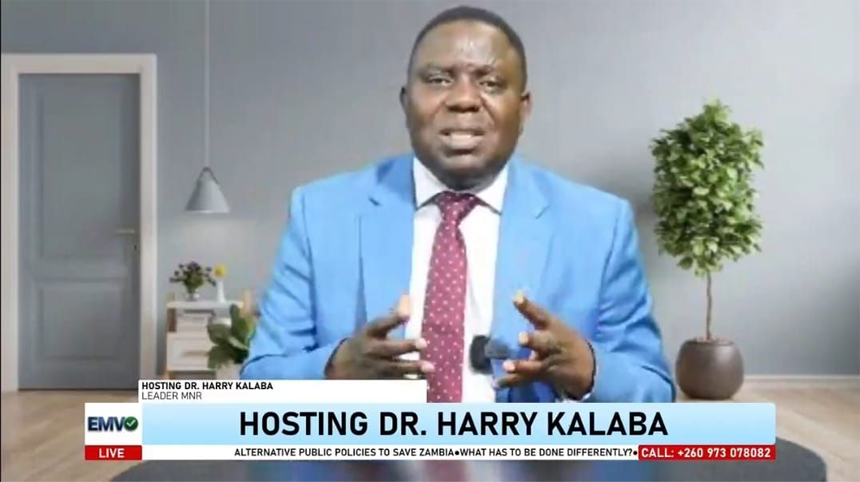
The article “Challenges of Opposition Unity” By Brian Matambo dated 5th February 2026, in apparent response to the CF President Harry Kalaba’s appearance on Amb. Emmanuel Mwamba’s EMV raises important points about the enduring tension between principle and pragmatism within Zambia’s opposition politics. It correctly observes that unity efforts have repeatedly faltered, often collapsing under competing expectations of leadership, control, and electoral viability. However, in attempting to balance the argument, the article risks normalising a dangerous assumption: that electoral transferability and party size are sufficient justification for dominance within opposition alliances—regardless of history, conduct, or credibility.
While it may be factually accurate that the Patriotic Front (PF), even when contesting indirectly under the Tonse Alliance, still commands a loyal voter base, this reality cannot be divorced from why PF lost power in the first place. Elections are not merely arithmetic exercises; they are moral verdicts. Zambians did not vote PF out because it was small or ineffective. They voted PF out because of corruption, treachery, lawlessness, and savage political behaviour that had become systemic and intolerable.
To argue that PF’s continued vote-mobilising capacity automatically entitles it to anchor any opposition alliance is to ignore the deeper lesson of 2021. That election was not a rejection of PF’s organisational strength; it was a rejection of its values, conduct, and governance culture. Any unity arrangement that treats PF’s past as an inconvenience rather than a disqualifying burden risks reproducing the very conditions that drove citizens to demand change.
The by-election results in Chawama and Kasama, while politically instructive, should also be interpreted with caution. By-elections are low-turnout contests, often influenced by short-term mobilisation, historical loyalty, and protest voting rather than broad national endorsement. They do not constitute a moral reset, nor do they absolve PF of its record. Electoral relevance does not equal political rehabilitation.
More importantly, the article understates a critical concern raised by Citizens First and other stakeholders: unity that is structured around PF dominance is not unity—it is absorption. When one party insists on providing the presidential candidate, controlling the secretariat, and setting the rules, the alliance ceases to be a partnership. It becomes a vehicle for political resurrection, not national renewal.
The Tonse Alliance itself illustrates this danger. What was once sold as a broad-based coalition of equals increasingly resembles a recycling centre for old habits: internal manipulation, exclusionary decision-making, and the same political treachery that characterised PF’s final years in power. The behaviour that Zambians rejected at the ballot has not been abandoned; it has merely changed packaging.
Harry Kalaba’s position, therefore, should not be dismissed as idealistic or naïve. His insistence on equality, ideological clarity, and mutual respect is not a refusal to confront electoral realities; it is a refusal to mortgage the future for short-term arithmetic. Zambia does not suffer from a shortage of votes—it suffers from a shortage of trust. And trust cannot be rebuilt by pretending that numbers alone can wash away a legacy of corruption and abuse.
Yes, PF may be the bigger party by residual support. But size is not virtue. Influence is not innocence. And numbers do not confer moral authority. PF was voted out because of corruption, treachery, and savage behaviour—traits that, alarmingly, continue to surface under the Tonse Alliance. Any opposition unity that ignores this truth is not offering Zambia an alternative; it is offering a rerun.
If unity is to mean anything, it must be built not just on who can mobilise votes, but on who can command public confidence. Otherwise, citizens will rightly ask: unity for what purpose, and at what cost?