
By the Independent Political Correspondent
Thursday, 19th February, 2026
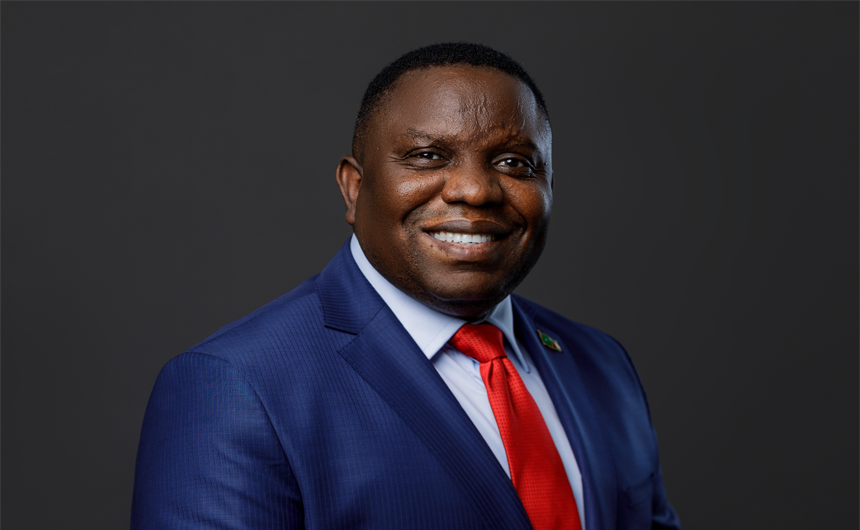
The sudden dropping of Elijah Julaki Muchima from his position has sent political shockwaves across the country. Was this an ordinary dismissal in the routine shuffle of governance, or is it something far more calculated — a strategic repositioning ahead of a potentially bruising electoral season?
To understand the implications, one must rewind to the circumstances that brought Muchima into the Ministry of Health in the first place.
The Health Ministry Turbulence
When Sylvia Masebo was moved from the Ministry of Health to the Ministry of Lands, many observers described it as a soft landing rather than a sanction. She had presided over a deeply controversial period in the health sector, particularly around procurement decisions that drew both domestic and international scrutiny.
Among the issues widely discussed in policy circles were questions around bulk medical procurement procedures and the involvement of foreign suppliers. Public concern intensified when governance weaknesses at Zambia Medicines and Medical Supplies Agency (ZAMSA) came under the spotlight, with diplomatic voices — including the United States Ambassador — publicly calling for accountability and transparency.
The immediate casualty was the ZAMSA chief executive. But critics argued that the accountability stopped short of the political level. Instead of dismissal, Masebo was reassigned to the Ministry of Lands — a key portfolio in its own right.
Into this storm stepped Elijah Muchima.
The “Clean-Up” Narrative
Muchima’s appointment to Health was framed as corrective — a steady hand brought in to restore order and credibility. His background in public service and experience within the Office of the President gave the impression of a man trusted with sensitive assignments.
But did the move truly resolve the systemic issues? Or was it merely optics — a temporary buffer against public outrage and international pressure?
Now, with Muchima himself dropped, new questions emerge.
Political Timing and Electoral Calculations
The timing of this development is difficult to ignore. Zambia is steadily approaching another electoral cycle. In such seasons, dismissals and redeployments are rarely random. They often signal recalibration.
To understand why this particular dismissal merits scrutiny beyond routine cabinet changes, one must first comprehend who Elijah Julaki Muchima truly is. He is not merely a technocrat who happened to occupy the Health Ministry. Muchima represents something far more significant in the UPND ecosystem—he was the architect of the party’s counter-intelligence and voter protection machinery that proved decisive in the 2021 election victory.
Our investigative team has established that Muchima’s portfolio always extended far beyond his ministerial brief. His relationship with the appointing authority transcends conventional political loyalty. During the tense pre-election period of 2021, when questions of security and personal safety were paramount for opposition figures, Muchima’s farm in Lusaka West functioned as one of the key safe houses where the UPND leader would retreat. This is not the act of a peripheral figure; this is the conduct of a trusted inner-circle operative who has been vetted under the most extreme conditions of political survival .
His background amplifies certain concerns. Having served as a senior officer under the Office of the President, Muchima possesses an intricate understanding of state security architecture, intelligence operations, and the vulnerabilities that exist within Zambia’s governance structures. Such individuals are not discarded lightly—they are either neutralised or deployed, but rarely simply dismissed.
That history makes his removal from a high-profile ministry intriguing.
Is this truly a fall from grace? Or is it a deliberate withdrawal from public office to allow for more focused political operations ahead of the polls?
The Militia Question: Muchima’s Shadow Portfolio
Which brings us to the heart of why Muchima’s dismissal may be something other than it appears. Our investigators have established that throughout his tenure as Health Minister, Muchima never relinquished his parallel responsibilities. He has been working consistently with both serving and ex-military personnel to construct what sources describe as a militia-like vote-buying and rigging mechanism favouring the UPND.
This is not speculation but the product of extensive field investigation. The network Muchima oversees draws on his deep connections within the security establishment, relationships cultivated during his time at the Office of the President and sustained through careful nurturing of military contacts. The objective is unambiguous: create a parallel structure capable of influencing electoral outcomes through means that extend beyond conventional political mobilisation .
The historical context here is instructive. Allegations of militia formation have dogged the UPND for years. In 2016, President Edgar Lungu accused the party of training 250 militia in Lusaka to cause violence, an allegation the UPND dismissed as embarrassing and false . More recently, in January 2021, the party was forced to deny engaging foreign mercenaries or white PR consultants linked to clandestine operations, with spokesperson Charles Kakoma dismissing the claims as attempts to “dent the image of the party” ahead of elections .
Whether those specific allegations were accurate is almost beside the point. What matters is the consistent pattern: accusations of extra-legal electoral preparation have followed the UPND through multiple election cycles. And at the centre of the party’s response to these challenges has been Muchima, whose expertise lies precisely in the grey areas where legitimate voter protection ends and more questionable electoral interventions begin.
Or Is It Something Else Entirely?
There is, of course, another possibility. That this is not a calculated ploy but a sign of internal strain.
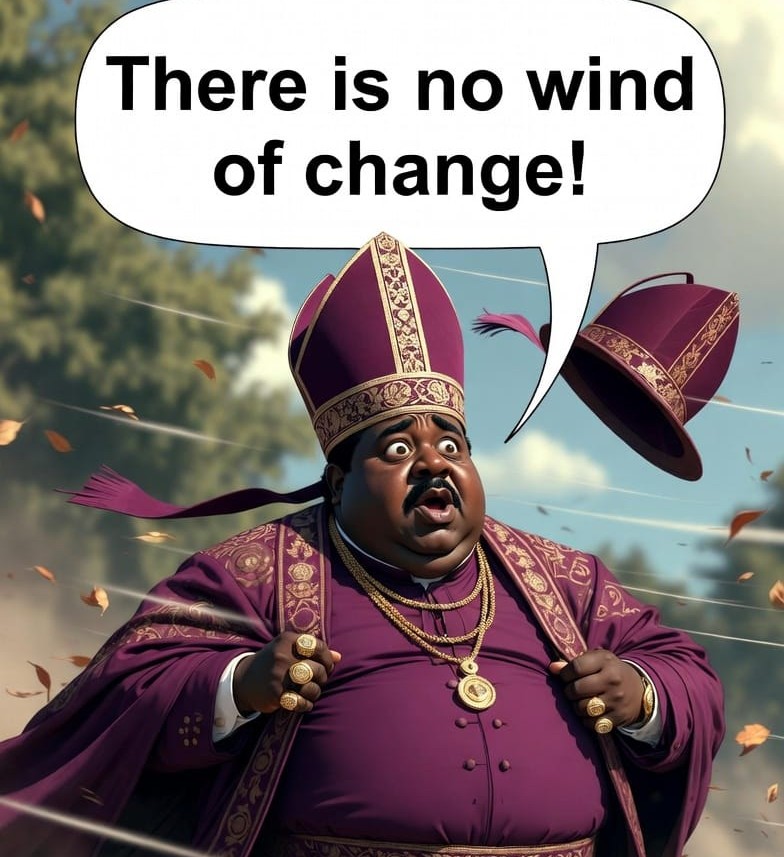
The Bemba saying warns: “Imbwa pakufwa nobwema bulaya” — when a dog is about to die, it loses its sense of smell. It can walk straight into the face of danger, unaware of what lies ahead.
Perhaps the UPND and its leader are indeed on precisely such a path, heading towards a debilitating defeat while mistaking tactical manoeuvring for strategic advantage. The public record of the Muchima ministry is not unblemished. Despite his appointment being framed as a clean-up operation, the corruption at ZAMMSA and the health sector continued to generate arrests and negative publicity throughout his tenure . The US aid cut of K1.4 billion (US$50 million) occurred on his watch, with Ambassador Michael Gonzales explicitly stating that government actions had “fallen drastically short of demonstrating a commitment to safeguarding U.S. assistance” .
Muchima’s defensive response—that the problem was inherited from previous administrations—may have been factually accurate but politically inadequate . The public does not reward ministers who blame predecessors; they expect resolution. If the UPND leadership genuinely assessed Muchima’s performance as falling short, and if his political protection had eroded sufficiently, then dismissal remains possible.
The Bigger Picture
What remains clear is that the electorate is watching closely. Moves that might once have passed quietly now invite scrutiny. Every reshuffle carries meaning. Every dismissal sparks interpretation.
Whether this development marks the beginning of a more aggressive campaign strategy or reveals deeper instability within the governing structure will only become evident with time.
For now, the question lingers:
Was Elijah Muchima dismissed — or repositioned?
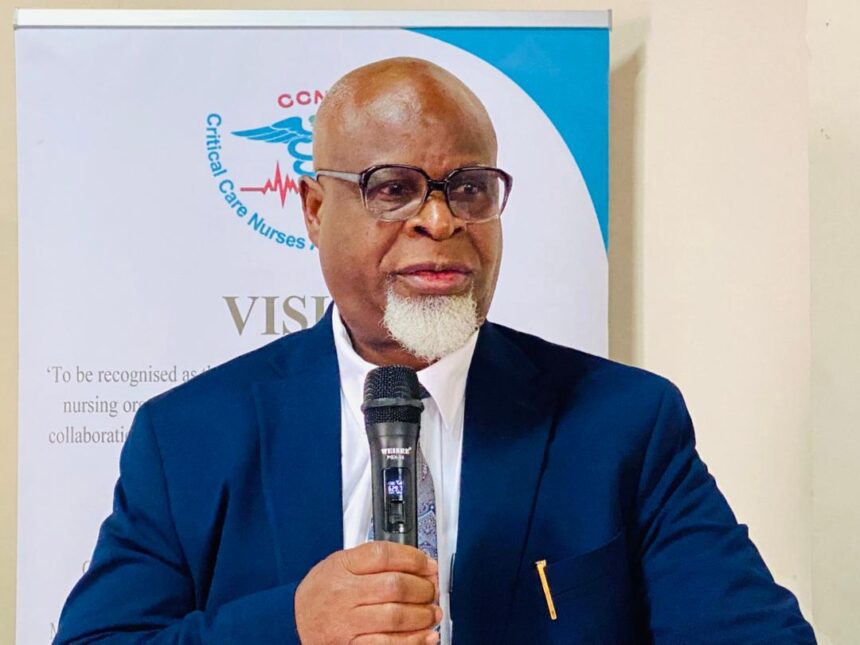
As for Engineer Elias Mulenga, his dismissal is nothing but collateral damage and may not attract any attention save for questions arising from his traditional ruler who may want to know why his subject has been relieved of duty.
In the main, the Bemba proverb about the dying dog losing its sense of smell may yet prove prophetic. Walking into the lion’s mouth, oblivious to danger, is always possible when hubris replaces calculation. But those who dismiss Muchima’s removal as simple political fallout may find themselves surprised when the election machinery he has spent years constructing reveals itself in August 2026.
For now, the prudent observer watches the shadows. That is where Elijah Muchima has always operated most effectively. And that, almost certainly, is where he is heading now, the question is on whose side will he be leaning?