
By the Independent Political Correspondent
Wednesday, 15th April, 2026
The reported plans by police to arrest Harry Kalaba following his televised remarks have ignited a renewed debate over freedom of expression and the state of democratic space in Zambia, barely months before the country heads into a crucial general election.
Kalaba, leader of the opposition Citizens First (CF), made headlines after announcing that his party would organize countrywide peaceful protests if government failed to address a series of grievances by the end of the week. Among the issues he raised were alleged irregularities in police recruitment and concerns surrounding appointments to the Electoral Commission of Zambia. Matters he argued strike at the heart of electoral credibility.
Yet it is not merely the content of Kalaba’s demands that has drawn attention, but the state’s response. The prospect of his arrest has triggered concern among governance observers, who see it as emblematic of a broader tension between law enforcement and constitutionally protected freedoms.
A Question of Expression, Not Incitement
Central to the unfolding controversy is whether Kalaba’s statements amount to incitement or fall squarely within the bounds of lawful political expression. In his address, the former foreign affairs minister explicitly emphasized that any protests would be peaceful and conducted in accordance with legal requirements, including notifying the police.
This point has become a focal argument among opposition supporters. They contend that an individual intent on inciting disorder would be unlikely to publicly declare plans or seek police clearance. Instead, Kalaba’s approach, they argue, reflects a deliberate attempt to operate within the law.
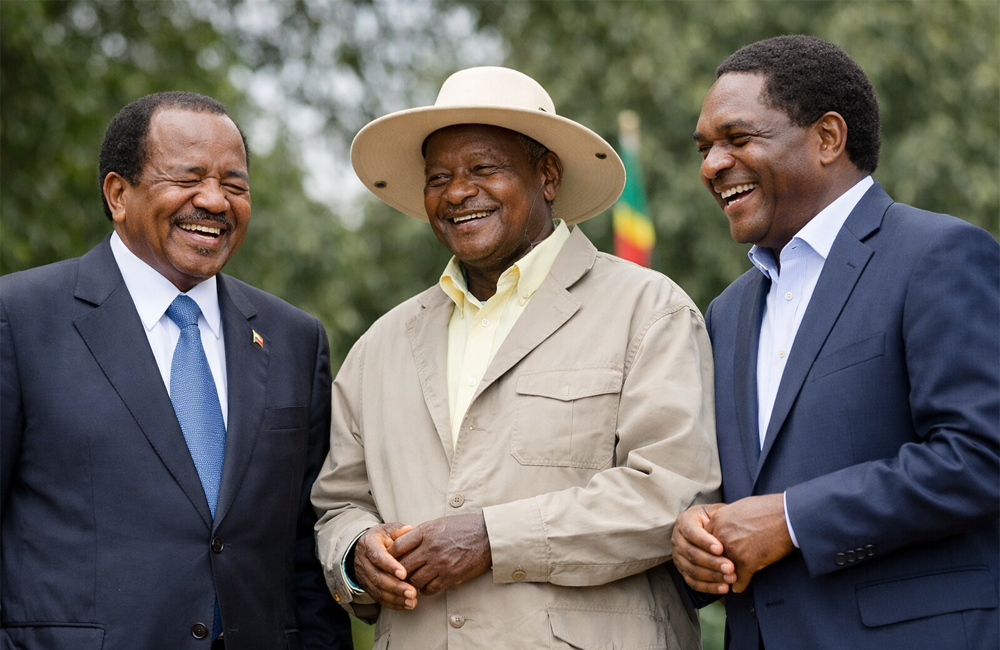
His tone and posture also contrast sharply with the political playbook often associated with opposition politics in Zambia’s recent past. Critics of the current administration have been quick to note that even Hakainde Hichilema, during his years in opposition, frequently clashed with authorities over public gatherings – sometimes proceeding without state approval in defiance of restrictions he deemed unjust. Something he can never allow those in opposition to do under his heavy handed regime.
Kalaba, by comparison, has projected a more restrained, diplomatic approach. Known for his measured posture, he appears intent on balancing political pressure with adherence to legal frameworks. A stance that now risks being tested by the very institutions he has sought to engage.
The Law and Its Application
Zambia’s Public Order Act requires organizers of public assemblies to notify the police in advance, a provision that has long been criticized for granting authorities broad discretion to permit or block gatherings. Successive governments have been accused of applying the law selectively, often to the disadvantage of opposition actors. While in opposition Hichilema campaigned against this law and promised to get rid of it once voted as president. Clearly this was just one of the many promises that this president has reneged on.
In this context, the threat of arrest raises a critical question: can the mere announcement of a potential protest conditioned on legal compliance constitute grounds for detention? Police permission is condition precedent. While they are at it, they can as well arrest the police as accomplices to this “crime” as they have being notified of the nationwide peaceful protests.
A senior diplomat from one of Zambians main funders expressed keen interest on how this issue will unfold in the eyes of the international community and warned that such a move could set a troubling precedent. If political leaders are penalized for signalling peaceful protest intentions, it may deter not only opposition figures but also ordinary citizens from exercising their rights to assembly and expression. Such is not the democracy we excitedly looked forward to seeing manifest under the new down government. “…we know that this government has failed on many fronts but this one is a clear manifestation of a failed state… I trust that he (referring to President Hichilema) will realize that Zambia has always been a model of democracy on the continent… but clearly this man is keen on reversing all that…”
Regional Attention and Electoral Stakes
The developments come on the heels of Kalaba’s appeal to the African Union, in which he called for urgent intervention to safeguard Zambia’s democratic processes ahead of the 2026 elections. His requests included the deployment of observer missions and engagement with the government to restore confidence in electoral institutions.
These actions suggest that the current dispute is not an isolated incident but part of a broader narrative about governance, accountability, and electoral integrity.
Public sentiment, too, appears increasingly polarized. While government supporters dismiss Kalaba’s claims as political maneuvering, critics point to what they describe as a pattern of heavy-handedness and a narrowing democratic space.
A Defining Moment
As the situation unfolds, the response of state institutions will likely carry implications far beyond one opposition leader. At stake is not only Kalaba’s personal liberty but also the broader principle of whether dissent, expressed peacefully and within legal bounds can coexist with state authority in Zambia’s evolving democracy.
For a country long regarded as a beacon of relative stability in the region, the coming days may prove pivotal in determining whether that reputation endures or begins to fray under the weight of political contestation and a president weighed down by the weight of his own unfulfilled promises and seeking to use suppression as his pressure valve. Clearly this nation is on red alert and the world is watching with keen anticipation.