
By the Independent Political Correspondent
Sunday, 19th July, 2026
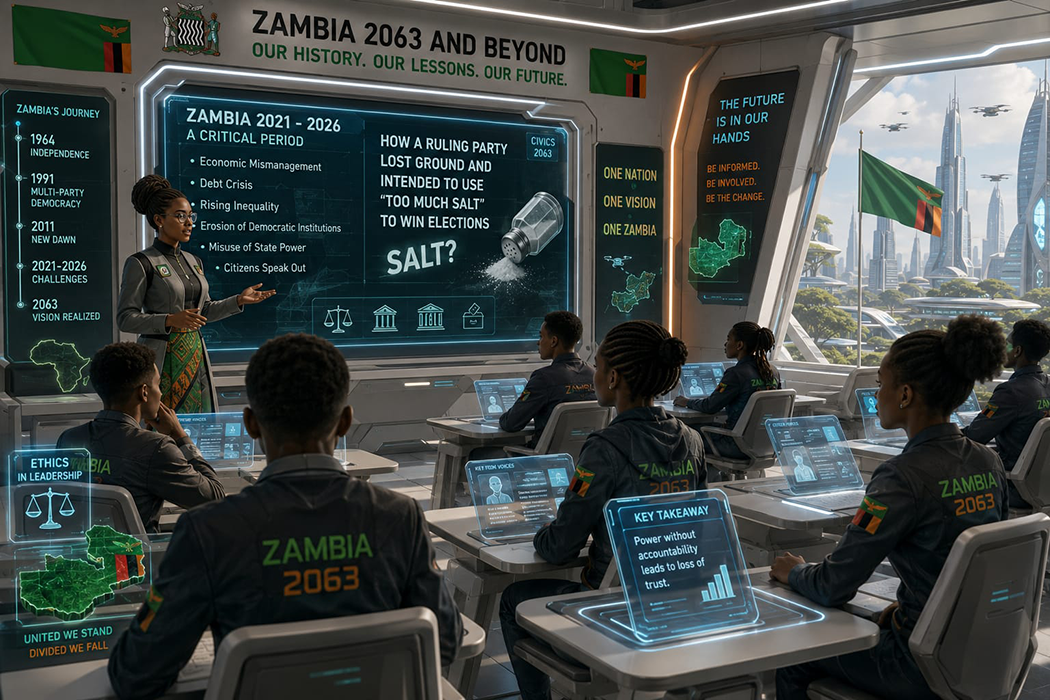
LUSAKA, July 20, 2063 – The young students of the National History Academy had gathered for their weekly lesson titled: “Political Decisions That Continue to Confuse Generations.” It was a popular class because, unlike mathematics, it did not require calculators. The only equipment needed was common sense.
The lecturer projected an old campaign video from the year 2026. The room went silent.
A young student raised his hand.
“Professor,” he asked, “are we sure this was not a comedy programme?”
The lecturer adjusted her glasses.
“No, my child. That was real politics.”
The student looked puzzled.
“So you mean leaders actually believed that citizens who were struggling with the cost of living, cost of food, farming costs, unpaid produce, unemployment and rising living expenses would be persuaded by a slogan of Salt instead of solutions?”
The professor sighed.
History records that after winning power in 2021, the ruling party developed fleeting confidence.
It convinced itself that it had become politically untouchable.
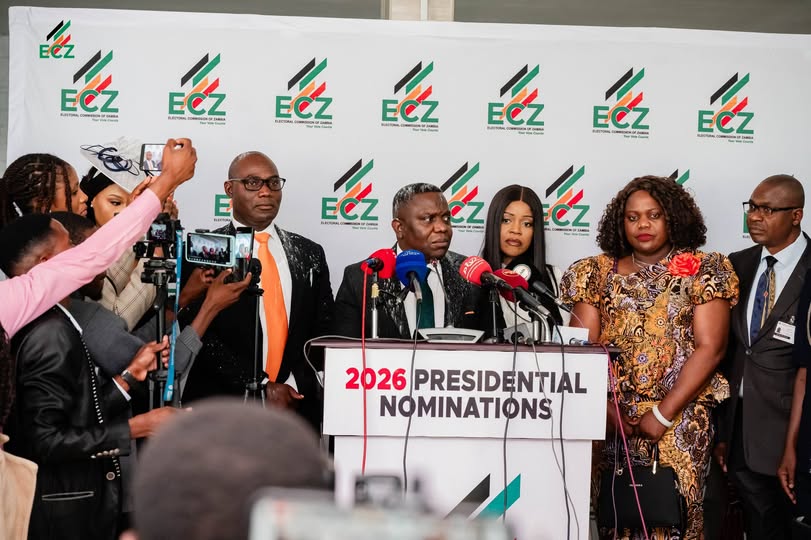
The opposition, it claimed, was finished. There was no serious challenger. Change was impossible. The August 13, 2026 election was, according to their political calculations, merely a ceremony where citizens would arrive, vote, and politely return home.
The party forgot one important lesson of democracy:
The absence of noise does not mean the absence of anger.
The ordinary citizen does not always announce their political intentions with a microphone. Sometimes they express them quietly in the market, on the farm, at the bus station, and finally inside the voting booth.
But in those years, the government appeared more interested in explaining why citizens should appreciate hardship than listening to why citizens were experiencing it.
The Era of Austerity and the Great Contradiction
The young historian highlighted another question that troubled his fellow students:
“How could a government ask citizens to tighten their belts while appearing generous to powerful foreign economic interests
The archives showed a period where ordinary citizens were repeatedly told that sacrifice was necessary. Times were difficult. The economy required discipline. Everyone needed to endure.
Yet, citizens were alive to the fact that economic concessions and incentives granted to foreign investors created debate about whether the burden of recovery was being fairly shared.
The irony was a subject of many documentaries:
A government asking citizens to survive on less, while simultaneously explaining why giving away more was necessary.
The students called it:
“The Great Belt-Tightening Ceremony – where the people tightened belts so much that eventually there was no stomach left to protect.”
The IMF Puzzle
The young student asked another question:
“Professor, is it true that the country was seeking international financial assistance while while boasting of reserves 5 times larger than the debt they sough and allowing foreign mining companies to enjoy tax rebates that would pass for criminality in the West?”
The lecturer nodded.
“That was one of the contradictions that shaped political debates of the era.”
The classroom erupted in laughter.
Not because poverty was funny.
Not because economic struggles were funny.
But because history had revealed one undeniable truth:
Citizens can forgive mistakes. They rarely forgive being treated as if they cannot see them.
From “Bally Will Fix It” to “Salt Sana”
The professor then moved to the famous slogans of the period.
The 2021 election had been dominated by a powerful message:
“Bally Will Fix It.”
It captured the mood of a nation that wanted change.
But by 2026, the political atmosphere had transformed.
The ruling party introduced a new message built around:
“Salt Sana.”
The Youths struggled to understand the strategy and how salt would be an economic solution.
“Professor,” one student asked, “did they really think citizens who were looking for cheaper fertiliser, better incomes, timely payments for crops, jobs and affordable living would be persuaded by promises of more salt?”
The professor replied:
“That was the question many citizens asked at the time.”
The problem was not the salt.
The problem was that people were hungry.
A nation struggling to put food on the table was being offered seasoning.
The Dance of the Final Days
The final campaign period became another favourite chapter in future political comedy.
The archives showed dramatic rallies, carefully curated crowds and enthusiastic displays of support.
The president took to campaign platforms with confidence, performing the familiar rituals of election season, speeches, celebrations and symbolic gestures designed to demonstrate popularity.
But historians of old described it as:
“The Great Campaign Theatre where the audience was loud, but the silence outside the stadiums was louder.”
Because after the music stopped and the crowds went home, the real voters remained:
As farmer waiting for payment.
Parent struggling with school expenses.
Worker facing rising costs.
Youths searching for opportunity.
Citizens looking for hope.
Another student in the back closed his notebook and asked…
“Professor, what exactly were those leaders thinking?”
Nobody answered immediately.
Because perhaps that was the greatest mystery of all.
How could political leaders see hardship but interpret it as loyalty?
How could they mistake patience for approval?
How could they believe citizens wanted speeches when they were asking for solutions?
The answer, according to the archives, was simple:
The professor shot back rather sarcastically, “they had begun listening more to applause than to reality.”
The Naked King of Democracy
The final lesson recorded by historians was not merely about one election.
It was about a timeless political warning:
Power becomes dangerous when leaders start believing their own propaganda.
The story of August 2026 became known as the tale of the “Naked King of Democracy” — a leadership that believed it was wearing magnificent clothes while citizens could clearly see otherwise.
The citizens eventually delivered their verdict.
They rejected what they believed was arrogance, ignored warnings and broken promises.
They reminded future generations of an old truth:
A government can survive criticism. It cannot survive losing touch with the people it governs.
And so, in 2063 and beyond, young scholars will continued to ask the same question:
“What was running through their minds?”
The professor’s answer remained the same:
“Perhaps they forgot that elections are not won by convincing leaders that they are popular. Elections are won by convincing citizens that their lives will be better.”
And that was how a ruling party discovered that too much salt could never replace bread.